


Benefits of Supporting Veteran Businesses: 2026 Guide
Table of Contents
- Why the Benefits of Supporting Veteran Businesses Hit Close to Home
- The Real Benefits of Veteran-Owned Businesses
- How to Support Veteran-Owned Businesses Without Government Contracts
- Veteran-Owned Business Certification: What It Is and How to Verify It
- Veteran Business Resources: Funding, Tax Credits, and Training
- Where Veterans Still Struggle, and How Your Dollar Helps
- Conclusion: Put Your Money Where Your Flag Is
- Frequently Asked Questions
Last Updated: October 12, 2026
Why the Benefits of Supporting Veteran Businesses Hit Close to Home
The benefits of supporting veteran businesses start with this: you're backing people who already wrote a blank check to this country. When you spend money at a veteran-owned shop, that money stays in your town. It pays a mortgage. It buys school clothes.
Here's what most folks miss. Veteran entrepreneurs don't quit when things get hard. They've been colder, hungrier, and more tired than any bad quarter will ever make them. That carries over into how they run a business.
This guide from Badger Call Design breaks down the real benefits, how to spot a legit veteran-owned operation, and what resources exist for vets who want to hang their own shingle.

U.S. Small Business Administration veteran-owned business resources
The Real Benefits of Veteran-Owned Businesses
Veteran-owned businesses tend to run lean and run honest. That's not marketing. That's training.
Here's the part most listicles skip. The benefits of supporting veteran businesses aren't just warm feelings about the flag.
What you actually get when you buy from a vet:
- Reliability. A mission doesn't get half-done. Neither does an order. Vets are trained to close out a task and report honestly, even when the report is bad news.
- Accountability. If something's wrong, you'll hear it straight. No runaround, no scripted apology from a call center.
- Local impact. Most veteran-owned shops are small and owner-operated. The money you spend stays in your town longer than it does at a big-box chain.
- Diverse perspective. Vets come from every walk of life, every corner of the country, every background. That shows up in what they build and who they hire.
- Supplier diversity value. For corporate buyers, spending with a verified veteran-owned supplier can count toward supplier-diversity goals and, in some cases, toward subcontracting plans on federal contracts.
The local economic piece, in plain terms.
Veteran-owned businesses skew small. Most are owner-operated, often one or two people plus a handful of employees.
The customer-service angle.
Vets are trained to take care of the people to their left and right. That instinct doesn't turn off when the uniform comes off.
What it isn't.
Buying from a veteran-owned business doesn't automatically mean you get a better product. Some veteran-owned shops are great. Some are average. Same as any other category.
Leadership Skills and a Mission-Driven Approach
Leadership in the military isn't a seminar. It's earned under pressure.
Vets learn to make decisions with incomplete information and live with the outcome. They learn to take care of the people to their left and right before themselves.
Small business ownership rewards exactly those traits. Discipline, resilience, adaptability. A vet who ran a repair locker at sea can run a shop. A vet who planned a mission can plan a product launch.
A few concrete ways that training shows up in a business:
- Decision-making under pressure. A small business owner makes dozens of calls a day with incomplete data. Vets have already done that in worse conditions.
- Resource management. Military logistics is about doing more with less. That's the same skill that keeps a small shop solvent through a slow quarter.
- Team building. Vets know how to train a new hire fast and trust them to work without a babysitter.
- Mission focus. A clear objective and a plan to get there. That's the difference between a hobby and a business.
None of that guarantees success. Plenty of veteran-owned businesses fail like any others. But the baseline skill set is real, and it's one of the reasons veteran-owned firms tend to punch above their weight in owner-operated categories.
How to Support Veteran-Owned Businesses Without Government Contracts
Most people will never write a federal contract. That's fine. You don't need one.
Here's how to support veteran-owned businesses with your everyday spending:
- Buy direct when you can. Skip the middleman. Go straight to the veteran-owned shop.
- Ask who owns it. A quick question at the counter or on a website's About page tells you plenty.
- Leave a real review. Reviews move the needle for small shops more than ads do.
- Tell a friend. Word of mouth is still the best marketing there is.
- Buy a gift. Holidays, birthdays, graduations. A veteran-owned shop is a solid default.
That's it. No paperwork. No forms. Just point your wallet at people who earned it.
Veteran-Owned Business Certification: What It Is and How to Verify It
Veteran-owned business certification is a formal recognition that a business is owned and controlled by a veteran. It matters most for government contracting, where certain set-aside contracts are reserved for verified veteran-owned and service-disabled veteran-owned small businesses.
Verification usually runs through the U.S. Department of Veterans Affairs Vets First Verification Program for federal work. Some states and private certifying bodies run their own programs too.
Patriotic Apparel Business Cards — 'Shop Patriotic Tees' Promotional Card 2.0 →
To check whether a business is legit:
- Look for a certification number or logo on the site.
- Ask which agency or body issued the certification.
- Cross-check the business name against the certifying body's public directory.
- For federal contractors, search the SAM.gov entity registration database.
Not every veteran-owned business bothers with certification. Plenty of small shops skip it because they don't chase government work. That doesn't make them less veteran-owned. It just means you have to ask.
Veteran Business Resources: Funding, Tax Credits, and Training
Veteran business resources cover a lot of ground: startup funding, small business loans, loan guarantees, grants, and tax credits.
A few worth knowing:
- SBA programs. The Small Business Administration runs loan guarantee programs and a dedicated Office of Veterans Business Development.
- Work Opportunity Tax Credit. A federal tax credit for employers who hire from certain groups, including qualified veterans.
- Disabled Access Credit. A tax credit for small businesses that make accessibility improvements.
- Surplus federal property. Certain surplus federal property can be made available to eligible veterans for business use.
- Training and counseling. SBA-funded Veterans Business Outreach Centers offer entrepreneurship training, business counseling, and business development help.
SBA Office of Veterans Business Development
If you're a vet thinking about starting something, start there. Free help beats paid advice every time.
Where Veterans Still Struggle, and How Your Dollar Helps
Most articles about veteran-owned businesses stop at the benefits. That's half the story. The other half is the barriers, and understanding them is what turns a feel-good purchase into a deliberate one.
The real headwinds.
- Access to capital. Veteran entrepreneurs report difficulty accessing startup and growth capital at rates that concern small-business advocates. Lenders want collateral and a track record. A vet transitioning out of service often has neither in the civilian market, even with a strong resume.
- Civilian business networks. Military careers build tight professional networks, inside the military. Those networks don't transfer to civilian supply chains, industry associations, or the local chamber of commerce. A lot of veteran entrepreneurs start from zero on the relationship side.
- Certification complexity. Federal verification through the Vets First Verification Program takes time and paperwork. State and private certifications vary. A lot of small veteran-owned shops skip certification entirely because the juice isn't worth the squeeze for a business that doesn't chase government contracts.
- Transition and health. A meaningful share of post-9/11 veterans live with service-connected injuries or conditions that make the daily grind harder than it looks from the outside. That's not a talking point. It's a real operating constraint.
- Marketing and visibility. A veteran-owned shop with a great product and no marketing budget loses to a mediocre competitor with a bigger ad spend. Every time.
What your dollar actually does.

Here's the mechanism, step by step. When you buy from a small veteran-owned business:
- Revenue hits the owner's account, not a regional manager's spreadsheet.
- The owner pays local rent, local utilities, and often local suppliers. More of that dollar stays in your town.
- The owner can hire. A second employee is often the difference between a side hustle and a real business.
- The owner can reinvest. New equipment, more inventory, better shipping. That's how a small shop grows past year two.
- The owner can mentor. A lot of veteran business owners turn around and hire or advise other vets. That compounds.
That's job creation at the local level. That's local economic impact you can see with your own eyes, not read about in a report.
The year-two problem.
A lot of small businesses die in year two. Not because the product is bad, but because cash flow gets tight and the owner can't absorb a slow stretch. A veteran-owned shop that has steady repeat customers survives that stretch. One that doesn't, doesn't. That's the whole ballgame. Your repeat business isn't a nice gesture.
What you can do that actually moves the needle.
- Buy once, then buy again. A single purchase is a test. A second purchase a month later is a customer.
- Leave a real review. Reviews move the needle for small shops more than ads do.
- Tell one person. Word of mouth is still the best marketing there is.
- Ask before you assume. Not every business with a flag in the logo is veteran-owned. Ask.
- Recommend them. If a veteran-owned shop does right by you, put their name in front of someone who needs what they sell.
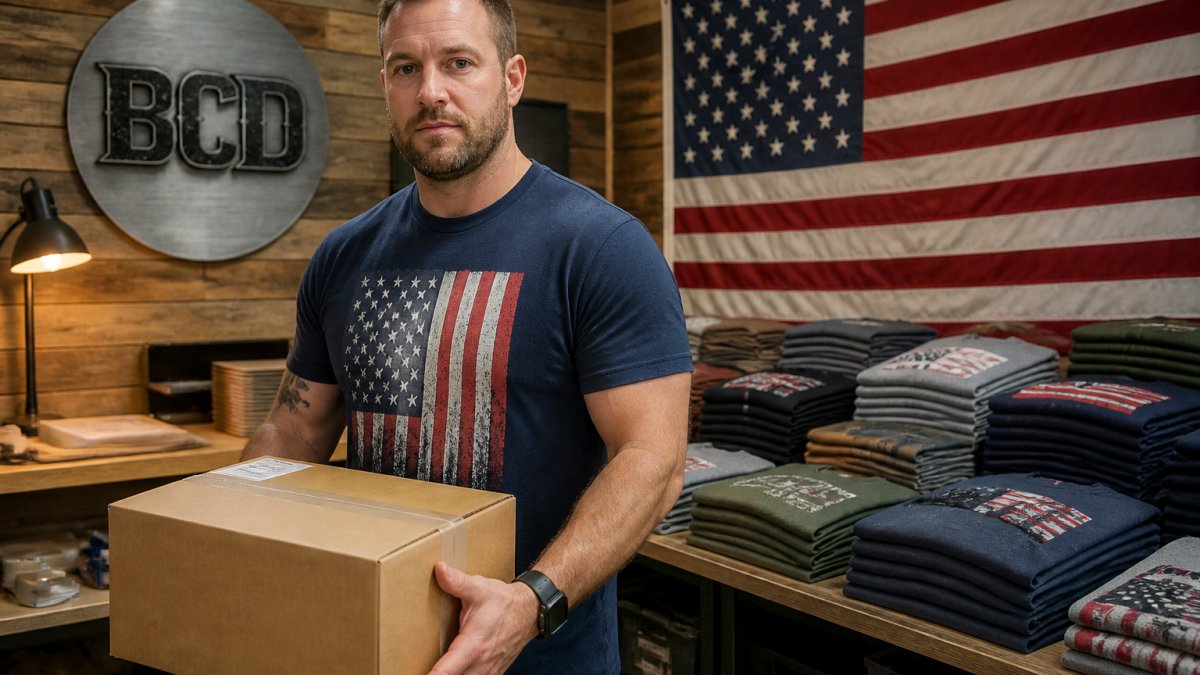
This is where a small shop like ours fits. Badger Call Design is veteran-owned and operated. Every shirt is printed in and shipped from the United States. We're not the biggest name in patriotic apparel, and we're not trying to be. We're a Navy vet and his wife running a shop from the road, and every order keeps the lights on.
Conclusion: Put Your Money Where Your Flag Is
Supporting veteran-owned businesses isn't a gesture. It's a decision you make with your wallet, over and over.
You've got the tools now. Verify who you're buying from. Buy direct. Leave a review. Tell a friend. That's the whole playbook.
Badger Call Design is veteran-owned and operated, with every product printed in and shipped from the USA. We offer free shipping on orders over $60 and buy 2 get 1 at 50% off sitewide. If you want gear that says what you mean, take a look.

SHOP NOW.
Frequently Asked Questions
What are the benefits of supporting veteran-owned businesses?
You keep money in your own community. Veteran-owned companies tend to hire locally, and they often bring a mission-driven approach to how they run things. They also tend to build diverse teams and give back to veteran causes. On top of that, many veteran entrepreneurs carry leadership skills, discipline, and resilience from their service into how they treat customers and employees. That combination shows up in the product and the service you get.
How can I verify that a business is actually veteran-owned?
Ask directly and look for proof. Check whether the company holds veteran-owned business certification through a recognized program, and look for a service-disabled veteran-owned designation if it applies. Many brands state their status on their About page. If a company claims it but won't show documentation, that's a red flag. A quick email asking who founded it and when usually tells you what you need to know.
What is the difference between veteran-owned and service-disabled veteran-owned businesses?
A veteran-owned small business is at least 51 percent owned and controlled by a veteran. A service-disabled veteran-owned small business meets that same bar, but the owner also has a service-connected disability. The distinction matters most in federal contracting, where set-aside contracts and federal procurement goals give service-disabled veteran-owned businesses their own lane. Both types can qualify for SBA programs and other veteran business resources.
Do veteran-owned businesses get tax breaks?
Some do, but it depends on the situation. The Work Opportunity Tax Credit can apply when a business hires qualifying veterans. The Disabled Access Credit can help offset costs for businesses making accessibility improvements. These are specific credits with specific eligibility rules, not a blanket discount. If you run a veteran-owned company, talk to a tax professional about which ones fit your business before you file.