


Grunt Style vs Nine Line: Veteran Owned Clothing Compared
Table of Contents
- Grunt Style vs Nine Line: The Quick Comparison
- Brand History: Two Different Roads to the Same Mission
- Fabric Weight, Material, and How These Shirts Actually Feel
- Fit, Sizing, and Print Quality: What Holds Up
- Price, Returns, and Customer Support Compared
- Why Veteran Owned Clothing Companies Matter to Buyers
- What Separates the Best Patriotic Clothing Brands
- Conclusion: Which One Fits You
- Frequently Asked Questions
Last Updated: October 1, 2026
Grunt Style vs Nine Line: The Quick Comparison
If you've worn a uniform, you've seen both logos. Grunt Style vs Nine Line apparel is the comparison most veterans end up making before they spend money on patriotic graphic tees. This breakdown from Badger Call Design looks at fabric, fit, print quality, and how each brand treats the people who buy from them.
Grunt Style built its name on attitude. Nine Line built its name on a promise to give back. Both are veteran owned clothing companies, and both sell a lot of shirts. The real question isn't which logo looks tougher. It's which shirt survives the wash, fits right, and comes from a company that stands behind it.
Below, I'll walk through what holds up, and where each one falls short. I'll also tell you where a smaller veteran-operated shop fits into the picture.
| Category | Grunt Style | Nine Line Apparel |
|---|---|---|
| Brand focus | Attitude-driven graphics | Patriotic themes, giveback messaging |
| Fabric feel | Heavier cotton blends | Mid-weight cotton blends |
| Fit | Runs fuller through the chest | Runs closer to standard sizing |
| Print style | Bold, high-contrast screens | Detailed, layered screens |
| Best for | Loud, everyday wear | Cleaner patriotic designs |
Brand History: Two Different Roads to the Same Mission
Grunt Style started with a simple idea: put military pride on a shirt and sell it to people who miss the uniform. It grew fast because the designs hit hard and the brand didn't apologize for it.
Nine Line took a different road. The name comes from a military medevac term, and the company leaned into giving back from the start. That mission is a big part of why people buy from them.
Both are legitimately veteran owned clothing companies. Neither one is a costume shop pretending to be military.
Where they split is tone. Grunt Style sells attitude. Nine Line sells service and sacrifice. If you care about where your money goes, that difference matters more than the graphic on the front.
Fabric Weight, Material, and How These Shirts Actually Feel
Fabric is where the marketing stops and the truth starts. Most shirts from both brands run in the mid-weight cotton range, roughly what you'd expect from a standard retail tee.
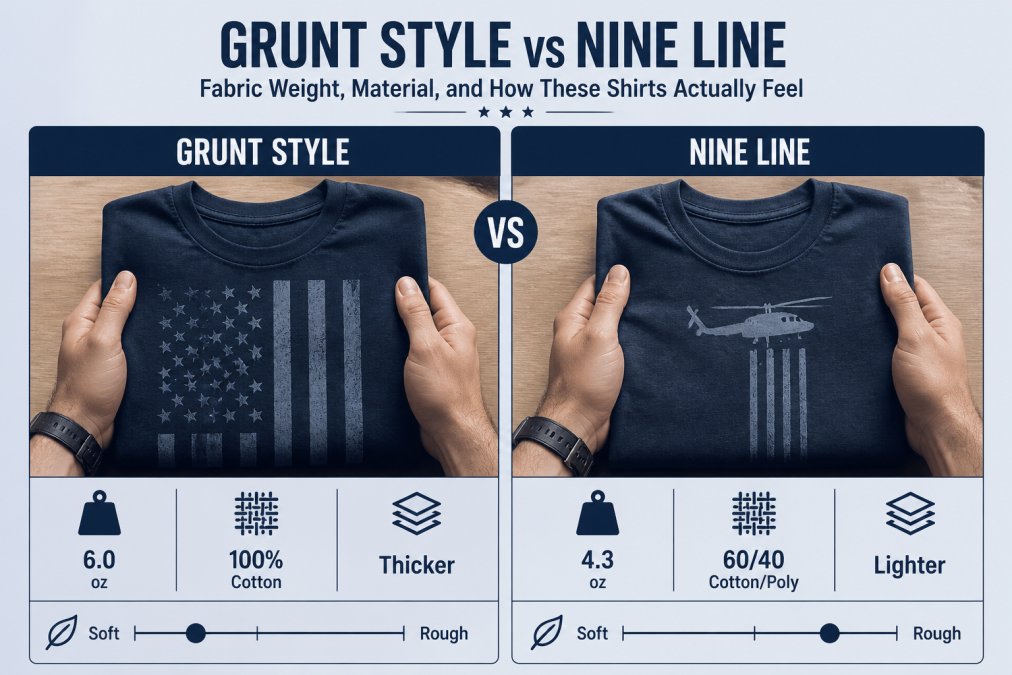
Here's what most guides miss: a heavier shirt isn't automatically better. Heavy cotton holds a print well but can feel hot in summer. Lighter ring-spun cotton breathes better and drapes softer, but the print has to be done right or it fades.
If a listing won't give you the fiber content and the weight, that's your first red flag.
Grams per square meter, or GSM, is the number to ask for if you want to compare apples to apples. A 150 GSM shirt is light. A 180 to 200 GSM shirt is a solid everyday weight. Anything north of 220 GSM is a heavy tee that will feel like a jacket in July. That's fine for a print, but it's not a heavyweight work shirt, and nobody should sell it like one.
Here's the wash-test angle you won't find on the brand sites. The print on a properly cured screen print will still be sharp at twenty washes. What fails first is the fabric, not the ink. Cheap cotton pills at the collar and the hem. Ring-spun cotton holds its shape longer because the fibers are combed and twisted tighter before spinning. That's the real difference between a shirt that lasts two years and one that lasts six months.
That's why Badger Call Design uses Gildan Softstyle 64000 for its tees. It's 100% ring-spun cotton, light fabric, and runs true to size. The I've Got Your Six T-Shirt is a good example of a light shirt that still holds a clean print.

Fit, Sizing, and Print Quality: What Holds Up
Fit is the number one reason people return a shirt.
That's the short version. Here's the longer one. If you've got a long torso, check the length measurement on the size chart before you buy. Most listings post chest width and body length in inches. Use those, not the model photos. Models are picked to make the shirt look good, not to tell you how it fits a 5'10" guy with a 44 chest.
Print quality comes down to two things: the ink and the screen. Screen printing lays down a thick layer of plastisol ink and cures it under heat. Done right, that print outlasts the shirt. Done wrong, it cracks on the first wash. The failure point is the cure, not the design.
Direct-to-garment, or DTG, is the other method you'll see on smaller shops and print-on-demand sites. DTG soaks into the fabric instead of sitting on top of it. It feels softer and breathes better, but it fades faster than a good screen print, especially on dark shirts. Neither method is automatically better. It depends on the design and how the shop runs its equipment.
Cold water, inside out, hang dry. That's it. Do that and most screen prints will outlast the shirt itself. What I've seen go wrong is people washing hot and drying on high. That's what cracks a print, not the brand. Heat is the enemy. Every time.
Price, Returns, and Customer Support Compared
You're paying for the name as much as the cotton. That's not a knock, it's just how brand pricing works.
Returns are where the smaller shops usually beat the big ones.
At Badger Call Design, every shirt is printed and shipped in the USA, and orders over $60 ship free. The Splatter Patter America's 250th Anniversary shirt is built around the 1776 to 2026 milestone, which is the kind of design you won't find from the two big names.

Why Veteran Owned Clothing Companies Matter to Buyers
Buying from a veteran owned shop isn't charity. It's a choice about who gets your money and what they do with it.
The U.S. Department of Veterans Affairs tracks veteran entrepreneurship and small business support programs, and the U.S. Small Business Administration runs dedicated resources for veteran-owned businesses.
What Separates the Best Patriotic Clothing Brands
The best patriotic clothing brands do three things right: they print in the USA, they use quality blanks, and they stand behind what they sell.
- Confirm where the shirt is printed and shipped
- Check the fabric weight and fiber content
- Read the size chart, not the model photos
- Look for a real return policy
- See if the brand is actually veteran owned
Conclusion: Which One Fits You
Pick Grunt Style if you want heavier cotton and loud, attitude-first graphics. Pick Nine Line if you want cleaner patriotic designs and a giveback message baked into the brand. Both are solid choices from real veteran-owned companies.
Frequently Asked Questions
What is the Nine Line Apparel controversy?
Nine Line has drawn public criticism over the years for some of its marketing and social media posts, and for how it has handled certain political and cultural moments. That kind of backlash is common for any patriotic brand that takes loud public stances. If a brand's public statements matter to you before you spend money, read recent reviews and news coverage yourself rather than trusting a single headline. What matters most for the shirt in your closet is fabric, fit, print quality, and whether the company stands behind the product.
Is it okay for civilians to wear Grunt Style?
Yes. Grunt Style sells to anyone, and most of its designs are patriotic or military-themed graphics rather than official uniforms or rank insignia. Civilians wear them all the time. The only real rule is common sense: don't wear something that claims a rank, unit, or award you didn't earn, and don't pretend the shirt makes you a veteran. Wear it to show support. That's what most of these designs are for, and it's the same standard that applies to veteran owned clothing companies across the board.
What brands are similar to Grunt Style?
Nine Line is the closest match in size and style, with a similar mix of patriotic, military, and first responder graphics. Smaller veteran-run shops fill the same space with tighter design themes and smaller runs. When you compare them, look past the logo and check three things: fabric weight and material, how the print is applied, and the return policy. Those three decide whether the shirt still looks good after twenty washes, and they matter more than brand recognition.
Which brand offers better quality for the price?
Both Grunt Style and Nine Line sit in the same general price range for graphic tees, so quality comes down to construction details. Check the fabric weight and material on the tag, look at how the graphic is printed, and read reviews that mention wash performance. A heavier ring-spun cotton shirt with a good screen print or DTG application will outlast a lighter one every time. If the listing doesn't tell you the fabric weight or the print method, that's a sign to keep looking.
Can civilians wear Nine Line Apparel?
They can, and plenty do. Nine Line sells to the general public, and its catalog leans on patriotic, outdoor, and military-inspired themes rather than restricted insignia. The same courtesy applies as with any military-inspired clothing: wear the design, don't claim the service. If you're buying as a gift for a veteran or first responder, check the size chart before you order and confirm the return policy in case the fit is off.