


Is Graphic Apparel Good for First Responder Events?
Last Updated: November 10, 2026
Quick Summary
Is graphic apparel good for first responder events? Yes, for fundraisers, memorial runs, recruitment, and community days, where the shirt should say who you are. At fire scenes and calls, plain station shirts are the right choice.
- Graphic apparel works best at fundraisers, recruitment booths, and crew gatherings.
- Use a restrained design with a date or name for memorial runs.
- Keep fire scenes and calls in plain station shirts.
- Check the department's uniform and appearance policy before ordering event shirts.
- Order a full size run and buy a few extras for volunteers and guests.
Table of Contents
- Short Answer: Yes, But Only for the Right Event
- Graphic Apparel vs. Plain Station Shirts: What Actually Works
- Custom First Responder Apparel for Public Outreach and Recruitment
- First Responder T-Shirt Ideas by Event Type
- First Responder Shirt Design Ideas That Hold Up in Public
- First Responder Apparel Gifts for Retirees, Probies, and Crew Members
- Pick Your Crew Shirt and Get It Ordered
- Frequently Asked Questions
Short Answer: Yes, But Only for the Right Event
Graphic apparel works at first responder events where the crowd is there to see you and the message matters, so ask yourself whether is graphic apparel good for first responder events in general terms: yes, for fundraisers, memorial runs, and community days. At a fire scene or a call, plain station shirts are the right call. Badger Call Design builds USA-printed tees with first responder graphics for events where the shirt should say who you are. Pick the event first, then pick the shirt.
Graphic Apparel vs. Plain Station Shirts: What Actually Works
Plain station shirts do their job. They're practical, they blend in, and they don't draw attention you may not want on a call, which is why the question of whether is graphic apparel good for first responder events depends so much on the setting. Nobody should wear a graphic tee where a uniform policy says otherwise.
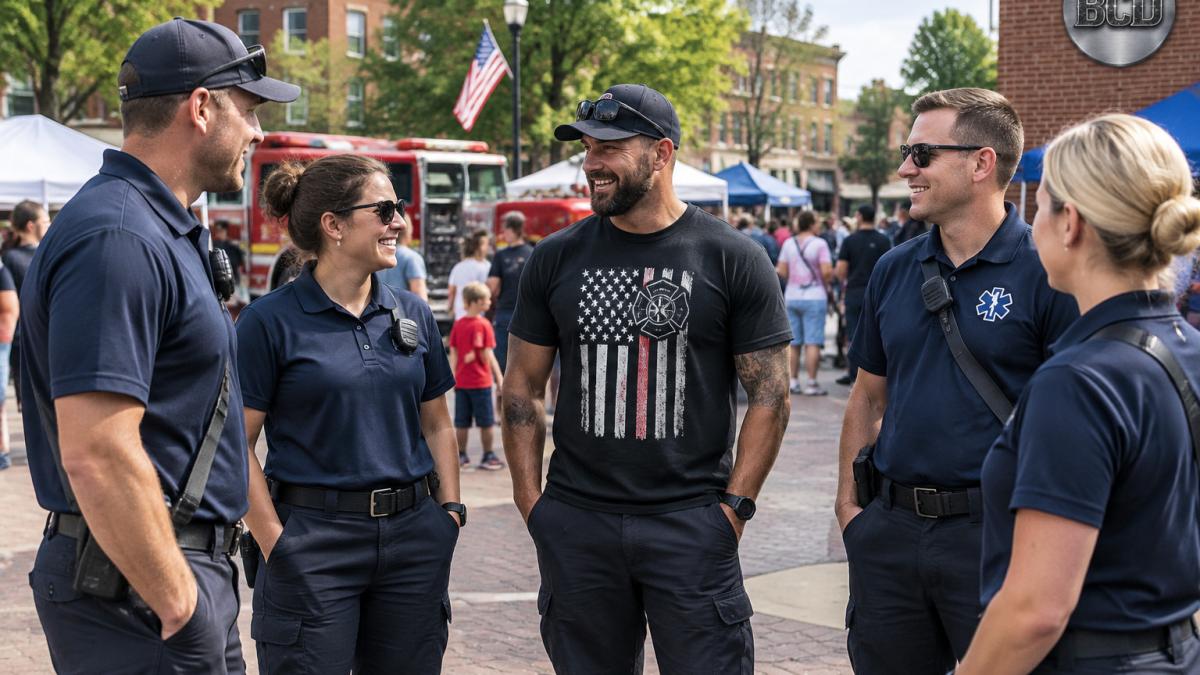
Off the clock and at public events, the picture changes. A plain polo tells people you work somewhere. A graphic tee tells them what you stand for. That difference matters when you're trying to get people to a table, a fundraiser, or a recruiting booth.
Keep the design simple enough to read from across a parking lot. Busy artwork turns into a blur at ten feet. Fabric matters too.
Here's how the options stack up by event, based on what the article covers.
| Event | Graphic apparel? | Why |
|---|---|---|
| Fundraisers | Yes | Crews get identified and donors start the conversation |
| Memorial runs | Yes, restrained | Quiet design with a date or name reads as respect |
| Recruitment and outreach | Yes | A shirt works as a walking billboard |
| Fire scenes and calls | No | Plain station shirts blend in |
| Public demos | Split | Duty personnel stay in uniform; volunteers wear the graphic |
| Crew gatherings | Yes | Matching shirts build cohesion |
Custom First Responder Apparel for Public Outreach and Recruitment
If you're running recruitment or outreach, a shirt is a walking billboard. Crews wearing matching shirts look organized, and people remember them. The First Responders Courage T-Shirt at $25.97 is one option that carries the crew's profession clearly.

Order enough for the whole crew, including the people who don't usually wear graphic tees. Get sizes sorted before the event, not the morning of. Buying a few extras for guests and volunteers is cheap insurance.
First Responder T-Shirt Ideas by Event Type
Different events call for different shirts. The keyword asks whether graphic apparel is a good choice, and the honest answer is: it depends on the event. Here's how we'd break it down, event by event, and where a plain shirt beats a graphic one.
Memorial events and remembrance runs. Graphic apparel earns its keep here. A quiet design with a date, a name, or a simple symbol reads as respect. Loud colors and busy artwork read as a party, which is the wrong tone. Pick a restrained graphic over a plain polo, but keep the design small and the colors muted. A remembrance run is also where a plain shirt can work if the crew wants to stay in the background and let the families lead.
Fundraisers. Graphic shirts sell. People donate to crews they can identify, and a matching shirt starts the conversation before anyone says a word. This is the event type where graphic apparel is the clear winner over plain shirts.
Recruitment and outreach. A shirt is a walking billboard. Crews in matching shirts look organized, and people remember them. Pick a design that carries the profession clearly so a stranger knows what you do in two seconds. Plain shirts lose here because they don't answer the question "who are these people?"
Public-safety demonstrations and open houses. This is where the line between event apparel and uniform matters most. The public needs to tell the difference between a crew member working the demo and a volunteer handing out flyers. A common pattern is: duty personnel stay in official uniform, and volunteers and support crew wear the event graphic. That keeps role clarity and keeps the department out of trouble with its own uniform policy.
Watch out: Check the department's uniform and appearance policy before you order event shirts. Some departments restrict who can wear department insignia, and some restrict graphic apparel on duty. Get the policy in writing before you spend money. Read this guide to choosing quality American flag shirts before you buy.
Informal team gatherings and crew morale. Graphic shirts build cohesion. A crew that wears the same shirt to a barbecue or a training day feels like a crew. Plain shirts don't do that job. This is the lowest-risk event type for graphic apparel because there's no public audience to misread the design.
Training days. Graphic shirts work when people are learning what the job looks like. A design that shows the role, like a medic or a rescue graphic, helps the public understand what they're watching. Keep the design clean so it doesn't compete with the demo.
How to Tell If the Shirt Actually Worked
Most articles stop at "wear a shirt." That's not a plan. Before the event, pick one or two things you want the shirt to do, then check afterward whether it did them.
- Recognition: Did people approach the booth or ask what the crew does? Count the conversations.
- Participation: Did more people sign up, show up, or stop by than at the last event without shirts?
- Fundraising: Did donations go up compared to a prior event with plain shirts? Track the number, not the feeling.
- Team cohesion: Did the crew wear the shirts without being told to? That's the simplest signal.
If the shirt didn't move any of those numbers, the design or the event was wrong, not the idea of graphic apparel. Adjust and try again next event.
Graphic vs. Plain: The Short Version
Graphic apparel wins at fundraisers, recruitment, community days, and crew gatherings. Plain or minimally branded shirts win at memorials where restraint matters, at demonstrations where role clarity matters, and anywhere the department's uniform policy says so. Pick the event first, then pick the shirt.
First Responder Shirt Design Ideas That Hold Up in Public
A shirt has to survive a hot car, a dozen washes, and a crowd reading it from a few feet away. Most of the design advice out there stops at "keep it simple." That's not enough when you're putting a badge, a patch, or a department name on a shirt the public will see.
Here's what we actually check before a design goes to print.
Legibility first. Stick to two or three colors. More than that gets expensive and muddy on a screen-printed tee. Keep the text short: a name, a symbol, a date. Skip the paragraph. Check the design on a phone screen at thumbnail size. If you can't read it there, people won't read it on the shirt either.
Contrast matters more than color choice. Light graphics on a dark shirt read from across a parking lot. Dark graphics on a dark shirt disappear. If the design has to work on both a black tee and a white tee, build two versions instead of one compromise.
Insignia accuracy is not optional. If the shirt carries a department patch, a badge shape, or a unit crest, get the real artwork from the department before you mock anything up. A wrong color on a maltese cross or a misspelled unit name is the kind of mistake people remember. Most practitioners find it's faster to ask the department's public information officer for the approved logo file than to redraw it from a photo.
Watch out: Never put an official badge, shield, or department seal on a shirt that isn't sanctioned by that department. Impersonation rules vary by state, and a fundraiser shirt that looks like a duty uniform can cause real problems for the crew wearing it.
Cultural and audience sensitivity. Memorial designs need restraint. A remembrance shirt should be quiet, not loud. Avoid graphics that could be misread by the public: skulls, weapons, or slogans that read as aggressive on a shirt worn at a community event. Ask a couple of people outside the crew what they see first. Their answer matters more than yours.
Sizing for real bodies. Order a size run that fits working bodies, not just the crew who happen to be at the station that day. Get sizes sorted two weeks before the event, not the morning of. Buy a few extras for volunteers and guests. It's cheap insurance.
Badger Call Design's shirts are printed and shipped from the USA.
First Responder Apparel Gifts for Retirees, Probies, and Crew Members
Gifts are easy to get wrong. A probie with three months on the job will wear a shirt he's proud of. A retiree may prefer something quieter. Match the shirt to the person, not to what looks cool to you.
For a retiree, the Purple Heart Combat Veteran T-Shirt or the Red Line Veteran T-Shirt, both $25.97, are options. For a probie or a crew member, the First Responders Courage T-Shirt at $25.97 is another option. For a deeper side-by-side, see police officer vs firefighter gift options. Badger Call Design offers buy 2 get 1 at 50% off sitewide.
Pick Your Crew Shirt and Get It Ordered
Start by picking the event, then pick the design that fits it. Count your people, add a few extras, and check sizing before you order. Free shipping applies on orders over $60.
Before you commit, check the return policy on the site. Here is how to check a return policy for apparel before you commit.
Pick the shirt, get it ordered, and get your crew out in public. Shop the First Responders Courage T-Shirt, the Never Forget 911 T-Shirt, or any of the others at Badger Call Design and see what a shirt can do for your crew.
Frequently Asked Questions
Is graphic apparel appropriate for first responder events?
Usually yes, as long as the event is public-facing and the shirt is not being worn in place of your uniform. Community days, fundraisers, memorial runs, and recruitment booths are where graphic tees do their job. They start conversations and show what your crew cares about. Keep the design clean, make sure the department name or logo reads from a few feet away, and check whether your agency or the event host has a dress policy before you order a batch. For official duty, stick to the issued uniform.
What should you look for in a first responder event T-shirt?
Start with the fabric and the print. Check the sizing chart, because a shirt that fits right in the chest and shoulders gets worn more. Finally, keep the artwork simple enough to read at a distance. Busy designs look good on a screen and get lost on a crowd.
What are good apparel gifts for first responders?
A solid pick is a shirt that marks a specific milestone or shows a personal connection to the job. Retirements, promotions, and graduations from the academy all work well. Many crews also like a plain or lightly branded tee for off-duty wear, since it fits into everyday clothes. Badger Call Design offers the First Responders Courage T-Shirt at $25.97, along with the Combat Medic T-Shirt, also at $25.97.
How do you choose custom apparel for a first responder group?
Decide the purpose first. Event shirts for a fundraiser can be bolder than station shirts meant for daily wear. Next, decide whether the design carries a department logo or a general first responder theme. Department logos build crew identity, while general themes work better when you are shirting several agencies at one event. Order a sample if you can, wash it a few times, and check the print. Finally, order a size run that covers your full crew, including the people who tend to be hard to fit.
