


How to Choose the Right T-Shirt Size: A No-BS Guide
Table of Contents
- Start With Your Actual Measurements, Not the Tag
- How to Measure for a T-Shirt Without Screwing It Up
- Reading a T-Shirt Size Chart Like You Mean It
- How a T-Shirt Should Fit: Shoulders, Chest, and Length
- Stuck Between Sizes? Here's How to Pick
- Why T-Shirt Sizes Vary Between Brands
- Shrinkage, Fabric, and Other Things That Change the Fit
- Frequently Asked Questions
Last Updated: October 20, 2026
Start With Your Actual Measurements, Not the Tag
Here's the thing about how to choose right t shirt size: the tag lies. Not on purpose, but it does. A "Large" from one brand fits like a medium from another.
So forget the tag for a minute. Start with your body.
Grab a soft tape measure. Not the metal one from your toolbox. A cloth one.
You need three numbers:
- Chest: around the fullest part, tape level, arms down
- Shoulder: seam to seam across your back, from one shoulder point to the other
- Length: from the high point of your shoulder down to where you want the hem
Write them down. Keep them in your phone. That's your baseline.
A common mistake is measuring over a bulky sweatshirt. Measure over a thin shirt or bare skin. You want the real number, not the padded one.
How to Measure for a T-Shirt Without Screwing It Up
The best way to learn how to measure for a T-shirt is to measure a shirt you already own and love. Lay it flat on a table. Smooth out the wrinkles.
Then measure:
- Chest width: armpit to armpit, straight across
- Body length: from the collar seam down to the bottom hem
- Shoulder width: seam to seam across the top
Double the chest width. That's your chest circumference.
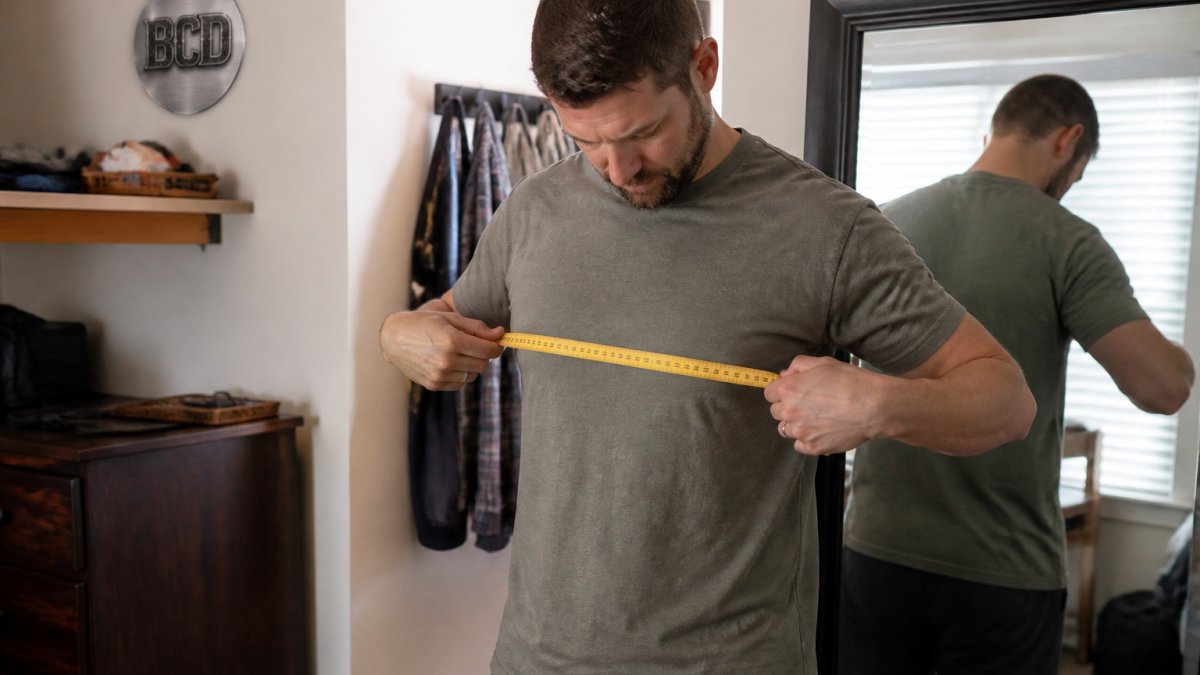
This method beats measuring your body every time. Why? Because it accounts for how the fabric actually drapes. Your favorite shirt already fits right. Copy those numbers.
A few rules to keep you honest:
- Keep the tape snug, not tight
- Don't stretch the fabric when you measure
- Measure the shirt after one wash, not fresh off the rack
Most guides skip that last part. Big mistake. A shirt that fits before washing can shrink into a crop top after.
Reading a T-Shirt Size Chart Like You Mean It
A T-shirt size chart is just a table of body measurements matched to sizes. That's it. No mystery.
Most charts list chest, length, and sometimes shoulder width for each size. Here's a typical men's unisex breakdown:
| Size | Chest (in) | Body Length (in) |
|---|---|---|
| Small | 34-36 | 27-28 |
| Medium | 38-40 | 28-29 |
| Large | 42-44 | 29-30 |
| XL | 46-48 | 30-31 |
| 2XL | 50-52 | 31-32 |
Read the chart for the specific shirt you're buying. Not the brand's general chart. Not a chart from a different product line. The one on that product page.
If a listing doesn't show a size chart, that's a red flag. Ask before you buy. Any outfit worth your money will give you the numbers.
How a T-Shirt Should Fit: Shoulders, Chest, and Length
Here's how a T-shirt should fit: the shoulder seam sits at the edge of your shoulder bone. Not hanging off your arm. Not creeping toward your neck.
The chest should have a fist's worth of room. Enough to breathe and move. Not so much that it billows.
Length matters most, and it's the one people ignore. The hem should hit around mid-fly, maybe a touch lower. Too short and you flash your belly when you reach up. Too long and it looks like a nightgown.
Quick check in the mirror:
- Shoulders: seam lines up with your shoulder edge
- Chest: flat across, no tight pull at the buttons or graphics
- Sleeves: end mid-bicep, not at the elbow
- Length: covers your belt, stops above your back pockets
If a shirt fails two or more of those, it's the wrong size. Send it back.
A graphic tee has one more rule. The design should sit centered on your chest, not wrapped around your sides. If the print pulls tight when you cross your arms, size up.
Stuck Between Sizes? Here's How to Pick
Two sizes fit, and you can't decide. Here's the call.
Vande Griend Family Fishing Trip →
Size up if:
- The shirt is 100% cotton (it'll shrink)
- You plan to dry it in a machine
- You want a relaxed, laid-back look
- The graphic sits close to the seams
Size down if:
- The fabric has stretch or a cotton-poly blend
- You want a fitted, sharp look
- You'll hang dry it
- The shoulders already feel loose
When in doubt, size up. A slightly loose shirt looks intentional. A tight one looks like a mistake.
Our tees run true to size, so start with your measured size. If you're right on the fence, go up one. You can always shrink cotton. You can't stretch it back.
Why T-Shirt Sizes Vary Between Brands
T-shirt sizing between sizes and brands is a mess, and there's a reason for it. There's no single law that forces every clothing maker to use the same numbers.
Each brand picks its own fit model. Some cut for a slim build. Some cut boxy. Some size their unisex shirts for men and expect women to size down.
So a medium is not a medium is not a medium. It's a suggestion.
What to do about it:
- Always check the specific brand's size chart
- Read reviews that mention fit ("runs small," "true to size," "size up")
- Buy from sellers who publish real measurements
- Know your three numbers and compare them to the chart
This is why we put "runs true to size" right on our product pages. You shouldn't have to guess. Get the numbers, match them up, order with confidence.
A little homework up front saves you the return-shipping headache later.
Shrinkage, Fabric, and Other Things That Change the Fit
You measured right. You picked the right size. Then you washed it, and now it fits different. Welcome to cotton.
Shrinkage is the big one. Most 100% cotton tees shrink some after the first wash, mostly in length. Pre-shrunk fabric shrinks less, but "less" isn't "none."
Fabric weight changes how a shirt hangs. Light fabric drapes and moves. Heavy fabric holds its shape and feels sturdier. Neither is wrong. Just know what you're buying.
Blends behave differently too. A cotton-poly mix holds its size better than pure cotton. It also feels different against your skin.
How to keep the fit you paid for:
- Wash cold
- Tumble dry low, or hang dry
- Skip the hot dryer, that's what shrinks cotton
- Turn graphic tees inside out to protect the print
Follow those and your shirt keeps its shape. Ignore them and you'll be shopping again in a month.
Here's the plain truth: getting the right fit comes down to three numbers and a tape measure. Measure your body. Measure a shirt you love. Match those numbers to the size chart on the product page. That's the whole game.
At Badger Call Design, we're a veteran-owned shop that prints and ships every shirt right here in the USA. Our tees run true to size, so your measurements do the talking. We back that with free shipping on orders over $60 and a buy 2, get 1 at 50% off deal, so you can grab a couple without sweating the cost.
Get your measurements, check our size chart, and order with confidence. SHOP NOW and wear something that fits right and means something.
Frequently Asked Questions
How do I choose the right T-shirt size?
Measure your chest, waist, and shirt length, then compare those numbers to the brand's size chart. Don't assume you're always a medium. Every brand cuts differently. If you're between sizes, go with the larger one for a relaxed fit or the smaller for a snug fit. And check the return policy before you buy.
Should I size up or down in a T-shirt?
Size up if you want room to move, plan to dry it on high heat, or have broader shoulders. Size down only if you want a fitted look and the chart says you're right on the line. When in doubt, size up. A slightly loose shirt looks better than one that's strangling you.
Do T-shirt sizes vary between brands?
Yes. One brand's large is another brand's medium. Even within the same brand, different styles can fit differently. Always check the specific size chart for the shirt you're buying. Don't rely on the tag from the last shirt you bought.
How should a T-shirt fit at the shoulders?
The shoulder seam should sit right at the edge of your shoulder bone, not hanging off or pulling inward. If the seam droops past your shoulder, the shirt is too big. If it digs into your neck or rides up, it's too small. That seam is the first thing to check.